
The Data-Driven Journey of an Avocado: From Orchard to Supermarket
Modern avocado supply chains are no longer driven by guesswork. Today, data and digital tools allow growers, packers, distributors, and retailers to monitor fruit quality and movement at every stage of the journey. From orchard to supermarket shelf, information about temperature, quality, and handling can now be tracked and analysed in real time.
This data-driven approach is transforming how the avocado industry operates. By improving transparency and decision-making across the supply chain, businesses can reduce waste, protect fruit quality, and ensure consumers receive consistently high-quality avocados.
Orchard: Where the Data Journey Begins
The data journey of an avocado starts in the orchard. Growers now use a variety of technologies to monitor crop performance and optimise harvest timing.
Sensors, satellite imagery, and orchard management software allow growers to track:
- Tree health
- Soil moisture levels
- Weather conditions
- Fruit maturity
By collecting and analysing this information, growers can determine the ideal time to harvest fruit, ensuring optimal flavour, oil content, and shelf life.
Packhouse: Grading and Quality Monitoring
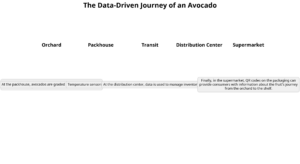
Once harvested, avocados move to the packhouse where they are graded and prepared for distribution.
Advanced grading systems can analyse fruit size, colour, and external defects. In some facilities, internal quality scanning technologies can also assess fruit condition without cutting it open.
This process generates valuable data about each batch of fruit, allowing packhouses to:
- Maintain consistent quality standards
- Track fruit performance
- Improve sorting accuracy
- Reduce waste
Transit: Protecting Quality in Motion
Transportation is one of the most critical stages in the avocado supply chain. Temperature fluctuations during transit can significantly impact fruit quality and shelf life.
Temperature sensors and IoT tracking devices are increasingly used in refrigerated containers and trucks. These systems monitor conditions in real time and alert operators if temperatures move outside the optimal range.
With this data, supply chain managers can quickly address potential issues before fruit quality is compromised.
Distribution Centers: Data-Driven Inventory Management
When avocados arrive at distribution centers, data continues to guide decision-making.
Inventory management systems track:
- Arrival times
- Storage conditions
- Ripeness stages
- Delivery schedules
This information helps distributors determine which fruit should be sent to market first and ensures that avocados reach retailers at the correct stage of ripeness.
Supermarket: Transparency for Consumers
At the final stage of the journey, data can also benefit consumers.
QR codes on packaging can allow shoppers to access information about where their avocados were grown, how they were handled, and when they were harvested. This level of transparency helps build trust while highlighting the quality and sustainability practices behind the product.
The Future of the Avocado Supply Chain
As digital technologies continue to evolve, the avocado industry is becoming increasingly data-driven. By integrating information across every stage of the supply chain, businesses can make smarter decisions, reduce losses, and deliver consistently high-quality fruit to consumers.
For growers, distributors, and retailers alike, embracing data is no longer optional—it is becoming essential for success in a modern, global avocado market.